The impact of Initial D First Stage continues to resonate within the anime and motorsport communities even years after its original airing. This pioneering series not only redefined street racing in animation but also influenced real-world car culture, elevating Japanese performance cars to iconic status. As we delve into this exhilarating series, we will break down its significance, characters, and lasting legacy.
7 Reasons Why Initial D First Stage Remains a Classic in the Initial D Anime Franchise

1. Authentic Depiction of Street Racing Culture
Initial D First Stage showcases the underground street racing scene in Gunma Prefecture, vividly portraying the passion and adrenaline of the sport. It presents an authentic look at various racing styles, terminology, and social dynamics, setting a benchmark for future racing anime. Undoubtedly, fans can feel the rush as they watch Takumi and his friends tear up the roads. The series gets it just right—along with sound effects, it perfectly captures the atmosphere of night races, making viewers feel like they’re right there in the car, racing against the clock.
2. Compelling Character Development
The characters, particularly Takumi Fujiwara, are intricately crafted with distinct personalities and backgrounds. Takumi’s evolution from a reluctant driver to a street racing legend symbolizes the coming-of-age theme that resonates with many viewers. We see his internal struggles and triumphs, making his character arc one of growth and realism. His relationship with his father adds another layer to the narrative, showcasing the pressures of expectations and the journey of self-discovery.
3. Iconic Soundtrack That Captures the Spirit
The soundtrack of Initial D First Stage, featuring Eurobeat tracks, played a crucial role in immersing viewers into the racing atmosphere. Songs by artists like David Dima and Matt Land make every race pulse with energy, making fans often associate the beats with high-speed thrills even years later. Who hasn’t found themselves blasting Eurobeat while cruising with friends? That infectious sound just makes the whole racing experience feel even more vibrant and electrifying.
4. Realistic Car Physics and Dynamics
The attention to detail in car mechanics and racing techniques stands out. The series accurately depicts drifting techniques and vehicle handling, making it not just entertaining but also educational for car enthusiasts. Techniques such as “tuning” the cars reflect real-world practices, allowing viewers to appreciate the nuances of automotive culture. For instance, watching Takumi’s famous drift down Akina is not just thrilling; it educates fans about vehicle dynamics and the importance of precision driving.
5. Cinematic Art Style and Animation Quality
Visually, Initial D First Stage employs a unique art style with a blend of traditional animation and CGI. The use of dynamic framing during racing scenes allowed the series to convey speed effectively, capturing the thrill of racing like few others had before. Despite its age, these creative choices still resonate with audiences today. The contrast between close-ups of the driver’s intense focus and sweeping shots of the cars flying across the terrain adds an exciting cinematic feel.
6. Influence on Real-World Motorsport
The impact of Initial D has extended to real-life racing. The fandom has inspired numerous car meets, drift events, and even automotive modifications among fans. Brands like Toyota and Nissan have benefitted from increased interest in their vehicles, making them symbols of performance and style thanks to the series. Many fans even discuss club experiences where they roll a D20 to mimic the racing outcomes, embodying the competitive spirit that Initial D celebrates.
7. A Gateway to the Broader Initial D Universe
Initial D First Stage serves as the foundation for subsequent seasons and adaptations, establishing a comprehensive narrative universe. Following Takumi’s journey reveals layers of complexity and expanding character arcs that entice new viewers and keep long-time fans engaged. Each race introduces new rivals and challenges, building anticipation for how this thrilling saga will unfold.
The Cultural Impact of Initial D First Stage on Anime and Car Enthusiasts
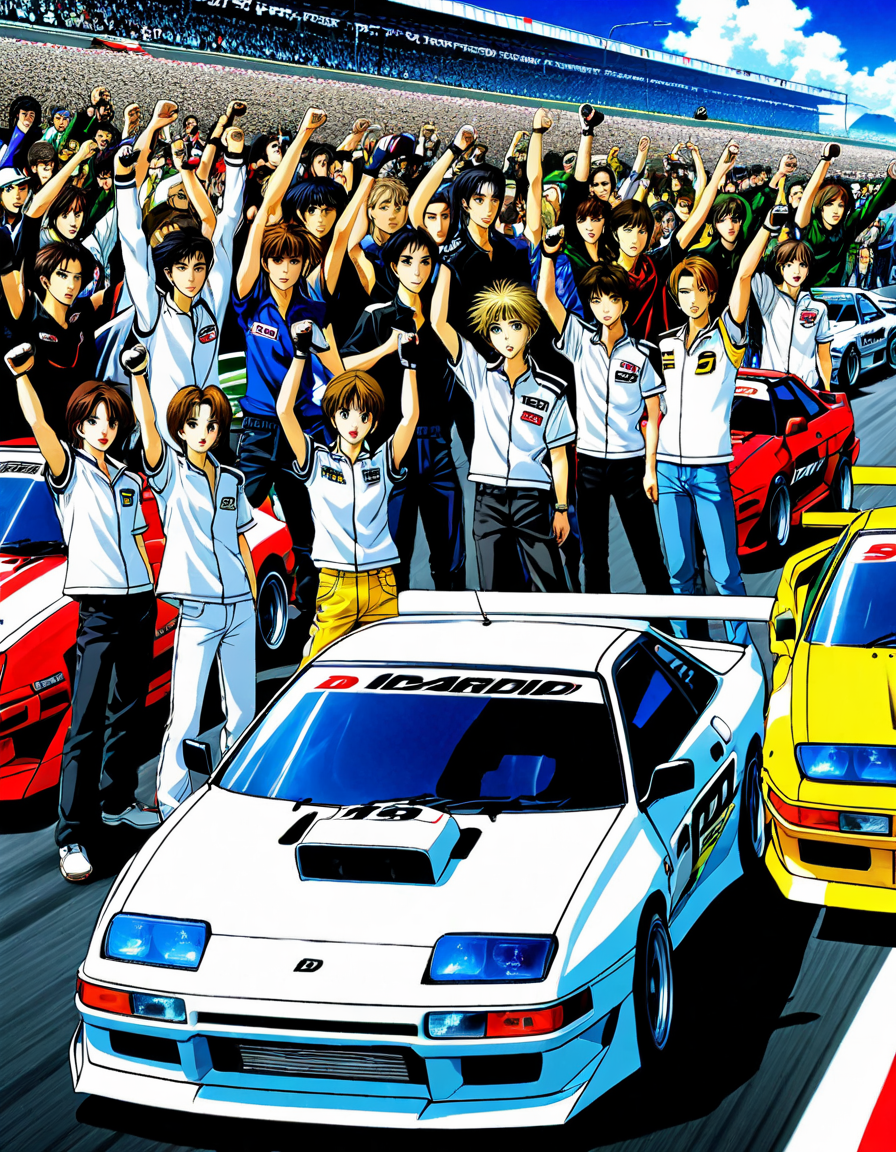
Initial D First Stage catalyzed a surge of interest in car culture within anime and beyond. Often seen depicted in various merchandise, memes, and even gaming, the series’ blend of high-octane racing and character-driven storytelling has influenced other anime such as Wangan Midnight and Capeta. Fans often form communities inspired by Initial D. From cosplay events to real-life car clubs where attendees channel their inner Takumi, the legacy thrives outside screens.
Car clubs worldwide often reference scenes from Initial D during meetups, and many enthusiasts perform famous maneuvers like Takumi’s “drift” to show their love for the series. It’s not uncommon for fans to reference creating their own “Initial D”-themed gaming nights, where they roll a D20 to determine the outcomes of mock races. This sense of community fosters a shared appreciation for both anime and motorsport, as enthusiasts exchange ideas, tips, and experiences that highlight their mutual passions.
The show’s characters, stories, and racing styles have become ingrained in popular culture. Enthusiasts often share memes or artwork celebrating classic moments from the series, solidifying Initial D as a cultural touchstone. From merchandise featuring Takumi and his iconic AE86 to recreating eye-catching race scenarios in games, fans keep the thrill alive.
The Legacy of Initial D First Stage: A New Generation of Racing Fans
As we venture deeper into the 2020s, Initial D First Stage stands not only as a nostalgic gem but also as a continuing influence on new anime creators and car enthusiasts alike. The series invites discussions about originality in storytelling and animation, encouraging upcoming artists and filmmakers to embrace innovative techniques while paying homage to their predecessors. Aspiring animators often cite Initial D as a benchmark that intertwines action and character depth seamlessly.
Additionally, with the rise of digital platforms, the reach of Initial D has expanded globally, attracting a new generation eager for thrilling narratives that incorporate both racing and personal growth. The themes of perseverance and self-improvement resonate well with today’s youth, motivating them to pursue their passions—whether that’s in motorsport or their personal lives. The principles embedded within the series highlight hard work, dedication, and a spirit of camaraderie.
As we look at the future of Initial D, it is clear that the legacy of Initial D First Stage will continue to inspire and excite. The thrill of street racing remains alive in both the realms of anime and in the hearts of fans around the globe. As it stands, Initial D continues to not only captivate us but also breathes new life into car passion, making sure that the streets continue to hum with the sound of engines and cheers of the crowd!
Whether you’re an old fan reminiscing or a newcomer ready to dive into the world of high-speed driving, Initial D First Stage guarantees an exciting ride that many have come to love. Be it through car modifications or storytelling, the spirit of street racing lives on, making it a timeless classic that’s sure to rev up any anime lover’s engine!
Initial D First Stage: Thrilling Trivia That Hits the Drift
Driving into Iconic Design Choices
When it comes to the Initial D First Stage, it’s hard not to get swept away by its iconic cars, especially the legendary Toyota AE86 Trueno. Fans might be intrigued to know that this particular model has gained a cult following, much like the newest models we see today, such as the 2024 Subaru Crosstrek. The AE86’s lightweight design and excellent handling exploits give a sense of nostalgia for real-life street racing enthusiasts. Speaking of which, the breathtaking locales where the anime is set are inspired by actual mountain passes in Japan, pulling viewers into a pulse-pounding drivescape.
Fueling the Passion: The Voice Behind the Characters
An often-overlooked aspect of the Initial D First Stage is the incredible voice acting that brings its characters to life. The original Japanese cast includes some celebrated talents who have voiced characters in numerous beloved franchises, such as the thrilling Attack on Titan season 3. Fun fact: the character of Ryosuke Takahashi is voiced by the famed actor who also lent his vocal chops to other popular series. This shows the strong connections and shared universe that many anime characters can have, making for delightful crossovers on the voice-acting scene.
Iconic Themes and Cultural Impact
The music of Initial D First Stage perfectly encapsulates the adrenaline rush of street racing. Combining electronic beats with Eurobeat rhythms, it revolutionized anime soundtracks, with influences reaching far beyond its original airing. Interestingly, the show has also inspired numerous memes and parodies, much like the well-known Expelled Film, which tells its own unique narrative with a satirical spin. It’s amazing how deeply embedded Initial D has become in pop culture, mirroring the way other classic films, like Miss Peregrine ‘s Home For Peculiar children, have captured audiences’ hearts and imaginations.
So the next time you dive into an episode of Initial D First Stage, remember the layers of trivia and history that fuel its ongoing appeal. It’s more than just a story about street racing; it’s a blend of iconic cars, unforgettable music, and cultural impact that keeps fans revved up for more!